Cap mass PPV sends at 2 to 3 per week per segment, keep at least 36 hours between sends to the same group, and treat response time as your real north star. Sub-4-hour replies to general messages and sub-5-minute replies to priority fans matter more than how often you message. Get that operational rhythm right first. Everything else in your DM strategy, from segmentation to onboarding to pricing tests, builds on it.
TL;DR:
- Sending 2 to 3 mass PPV messages per week per segment, spaced at least 36 to 48 hours apart, maximizes engagement without causing fan fatigue.
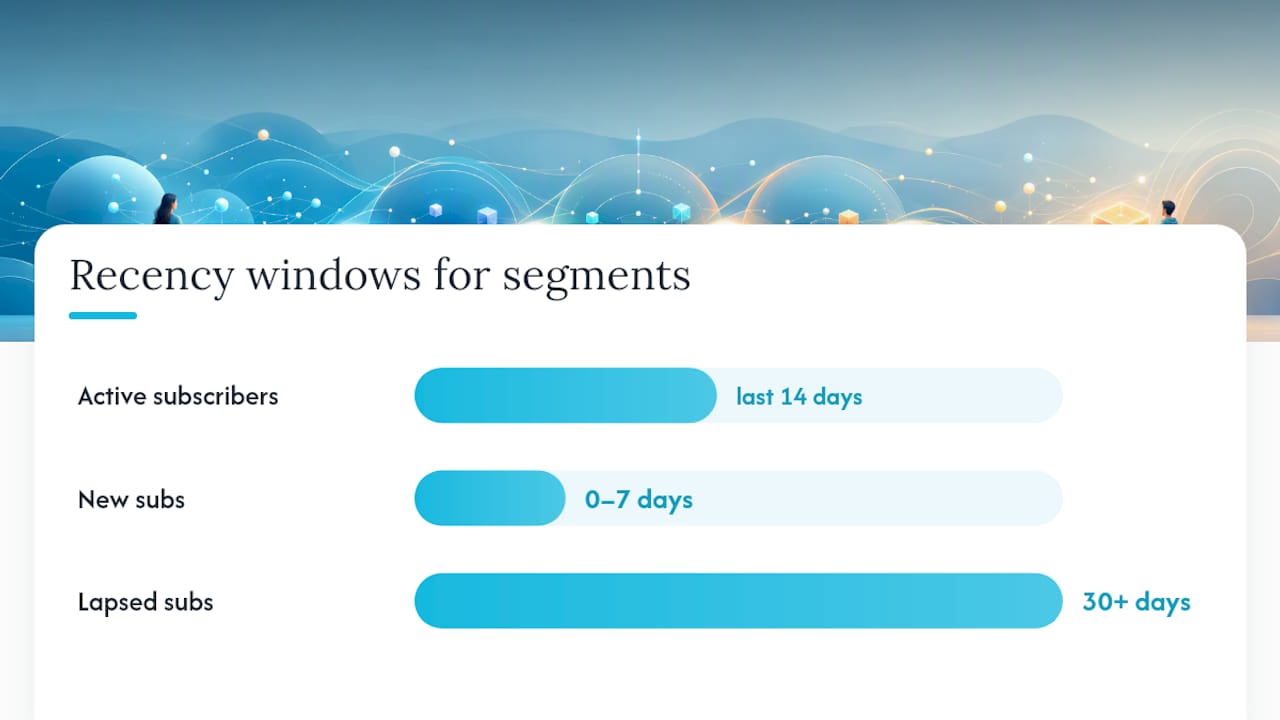
- Segmenting your list into active, purchasing, tipping, new, and lapsed fans improves response rates and prevents wasting effort on low-engagement users.
- Responding to priority messages within 5 minutes and general messages within 4 hours significantly boosts earnings, especially from high-value fans.
- A well-structured onboarding sequence within the first two weeks increases long-term purchase behavior, focusing on small, consistent asks.
- Maintaining a consistent cadence and response time requires operational systems like team support or AI tools to scale effectively without losing your voice.
Frequency and performance are locked together, and the data backs a specific answer.
Mass PPV sends should land in the 2 to 3 per week, per segment range. Industry analyses of top-performing accounts consistently identify this band as the sweet spot: enough volume to generate steady income, not so much that fans start ignoring your name in their inbox. Free engagement messages (check-ins, personal updates, non-paywalled content teases) run on a looser schedule and don’t count against your PPV quota, but they still need spacing so your account doesn’t read as a firehose.
Here’s the cadence framework that holds up across most established accounts:
The exception matters because urgency is a legitimate lever, not a loophole. A single flash sale announced outside your normal rhythm reads as an event. Three flash sales in one week reads as desperation, and fans notice the difference fast.
The counterexample is instructive. Creators who send daily PPV almost always see a short-term spike in revenue during week one, followed by a steady bleed in open rates over the following month. Platform-wide data shows mass-DM open rates fell from 41% to 19% between 2023 and 2025. Creators who over-message their lists are disproportionately represented in that decline. Once a fan starts skipping your messages in their notification feed, getting them to open again takes weeks of restraint, not one good PPV.
Sending less often only works if you’re sending smarter. A blanket message to your entire subscriber base is the fastest way to waste a good PPV on people who were never going to buy it, and it trains your most valuable fans to lump you in with the noise.
Break your list into segments before you touch the mass DM button:
Exclude low-engagement users from your regular PPV blasts entirely. Sending to someone who hasn’t opened a message in six weeks doesn’t just fail to convert. It drags down your overall open rate and makes your analytics harder to read. Route them into a separate reactivation sequence instead, usually a free message or a discounted offer designed to re-earn attention before you ask for money again.
Test segment performance the same way you’d test anything else: send the same PPV to two comparable segments at two different price points or times, then compare unlock rates. Segmented mass messaging consistently outperforms unsegmented blasts, often by a wide enough margin that the extra five minutes of list management pays for itself many times over.
Pro Tip: Tag new subscribers the moment they join and set a reminder to move them out of the “new” segment at day 7. Fans who get PPV pitches before they’ve received a single free message convert at noticeably lower rates than those who get a proper onboarding runway first.
Frequency gets the attention, but response time is where the real money leaks out. Creators who reply to 70% or more of their messages within 4 hours often out-earn slower responders by 3 to 5 times, and the gap isn’t subtle. A fan mid-conversation who doesn’t hear back for half a day has usually moved on to something else by the time you respond.
Set two benchmarks and hold yourself to both:
Prioritize your inbox with a simple tiering system: whales first, then anyone who unlocked a PPV in the last 24 hours, then new subscribers still in their first week, then everyone else. This isn’t about ignoring lower-tier fans. It’s about making sure your fastest replies go where they generate the most revenue.
Most conversations move through three phases: rapport building, soft escalation, and the offer itself. The mistake creators make is jumping straight to the pitch. A fan who’s spent three messages talking about their day doesn’t want a PPV link dropped in response to “how was your weekend?” Let the conversation earn the transition, then make the offer feel like a natural next step rather than an interruption.
AI drafting tools work well for the rapport-building phase, where tone matters more than precision. Full outsourcing to a trained chat team makes more sense once you’re getting more priority-tier messages than you can personally answer within your response-time targets. Detailed chatting strategy guidance covers the transition points in more depth.

Pro Tip: If you’re missing your 5-minute window on priority messages more than twice a day, that’s your signal to bring in help, not to lower the standard.
The first two weeks of a subscription decide most of a fan’s lifetime value. OnlyFans’ own automated welcome-message feature exists precisely because that first touchpoint is too important to leave to chance, and creators who skip it lose conversion they never get back.
A working onboarding sequence looks like this:
Each step is a small ask, not a big one. Fans who make a first purchase within two weeks tend to keep purchasing at a far higher rate than fans who go a month without buying anything, so the sequence is less about immediate revenue and more about establishing a purchase habit early. Templated welcome messages can save real time here without sacrificing the personal feel that makes the sequence work.
Pricing and cadence are the same lever pulled from two directions. Push either one too hard and unlock rates collapse together.
Keep mass PPV sends capped at 2 to 3 per week per segment, and layer price testing on top of that structure rather than running it separately. Split a segment into two comparable halves, send the same content at two different price points, and compare unlock rate and total revenue, not just the price itself.
Mix in free engagement messages between PPV sends. A segment that only ever hears from you when you want money starts treating every notification as a sales pitch, and open rates drop accordingly. One or two value-first messages a week between PPV sends keeps the relationship from feeling transactional.
Watch for these red flags:
Any of these should trigger a pause on that segment’s PPV cadence and a return to free, value-first messaging before you try selling again.
Four numbers matter more than everything else combined: open rate, unlock rate, response time, and revenue per DM. Track them at different intervals, because they move on different timelines.
Check response time daily. It’s the metric most sensitive to your own behavior, and small slips compound fast if you’re not watching. Review open and unlock rate trends weekly, segment by segment, since a single bad send can look like noise but three in a row is a pattern. Look at revenue per subscriber monthly to catch slower, structural declines that daily numbers miss.
A useful benchmark: warm, well-segmented lists can hit unlock rates of 12% to 20%, while unsegmented blasts often sit under 5%. That gap is almost entirely explained by segmentation, not content quality.
When numbers slip, run this checklist before you panic: audit your segmentation for drift (are lapsed subs sneaking back into active sends?), cut cadence temporarily on the affected segment, and check whether your content actually matches what that segment has responded to before. Tracking revenue per fan over time, not just per message, helps clarify whether engagement gains are translating into actual income.
Holding a 2 to 3 per week PPV cadence and a sub-4-hour response time simultaneously is a staffing problem, not a willpower problem. Most established creators hit a volume ceiling where doing it all personally means missing one target to hit the other.
Three models cover most situations:
Whichever model you pick, quality control has to be built in from day one. A style guide covering tone, boundaries, and escalation rules for high-value fans protects your voice better than spot-checking messages after they’ve already gone out. Weekly audits catch drift before it becomes a pattern fans notice.
The outcome most creators care about, faster response times without personally being online 16 hours a day, only shows up when the handoff is structured. Loose delegation without governance tends to produce generic replies that fans can spot immediately.
Pro Tip: Before outsourcing, write down three real conversations in your own words and voice. Use them as the training baseline for whoever picks up your chats, not a generic tone description.
Most creators treat DM strategy as a copywriting exercise: better hooks, better captions, better pricing psychology. The data doesn’t support that framing. The creators losing revenue aren’t writing worse messages. They’re sending too often to the wrong segments and replying too slowly to the right ones.
Over-mailing is the most common mistake, closely followed by skipping segmentation entirely and treating every subscriber as equally likely to buy. Both are fixable in an afternoon with better list hygiene, and both produce results faster than any amount of message-writing improvement.
Response ops get ignored because they’re less visible than content strategy. Nobody brags about their median reply time. But it’s the single biggest lever most creators aren’t pulling, largely because fixing it requires structural change, not a better opening line. That’s exactly the kind of problem an operational partner solves better than a solo creator working alone.
— Gjon
Getting the cadence right on paper is one thing. Holding it every single day, across every segment, while still hitting sub-5-minute response times on priority fans, is where most creators run out of hours in the day. Only-dreams is built specifically to close that gap: a 24/7 chat team trained on your voice, combined with data-driven segmentation and PPV cadence management, so the 2 to 3 sends per week actually happen on schedule instead of slipping to “whenever you get to it.”
Our account managers handle the segmentation work, the response-time discipline, and the ongoing analytics review this article walks through, freeing you to focus on content instead of inbox triage. We also offer AI-enhanced marketing as an add-on for creators who want faster reach across Instagram and TikTok without adding it to their own plate. If you’re an established creator earning $3,000 or more a month and want your DM operations handled by a team that lives in this data daily, reach out to Only-dreams for a consult on what a managed chat setup would look like for your account.