
The fastest way to run winback kampagnen OnlyFans creators actually feel is a prioritized, agency-run outreach that blends targeted mass PPV sends, individually specific DMs, and re-entry offers framed as loyalty gestures. Prioritize lapsed subscribers by past spend and tenure, then measure success through reactivation rate and 60-day retention. If those numbers hold steady past two months, you’ve recovered real revenue, not just a one-time payment.
TL;DR:
- Subdividing lapsed subscribers into targeted groups such as whales, recent buyers, and long-term churners improves winback success and reduces wasted outreach.
- A structured campaign with a clear three-phase cycle—auditing, re-onboarding, and iteration—maximizes reactivation rates over the 90-day period.
- Personal, data-driven direct messages outperform generic mass offers by referencing specific subscriber behaviors and history, enhancing connection and response rates.
- Re-entry offers should focus on time-limited trials or content bundles instead of permanent discounts to maintain price expectations and customer value perception.
- Outsourcing to an agency becomes justified once chat volume or revenue surpasses $5,000–$10,000 monthly, ensuring sustained personalization and ongoing optimization.
A winback campaign needs a clear framework before you send a single message. Without one, you’re just guessing at who to target and when, and you’ll burn goodwill on subscribers who were never coming back anyway.
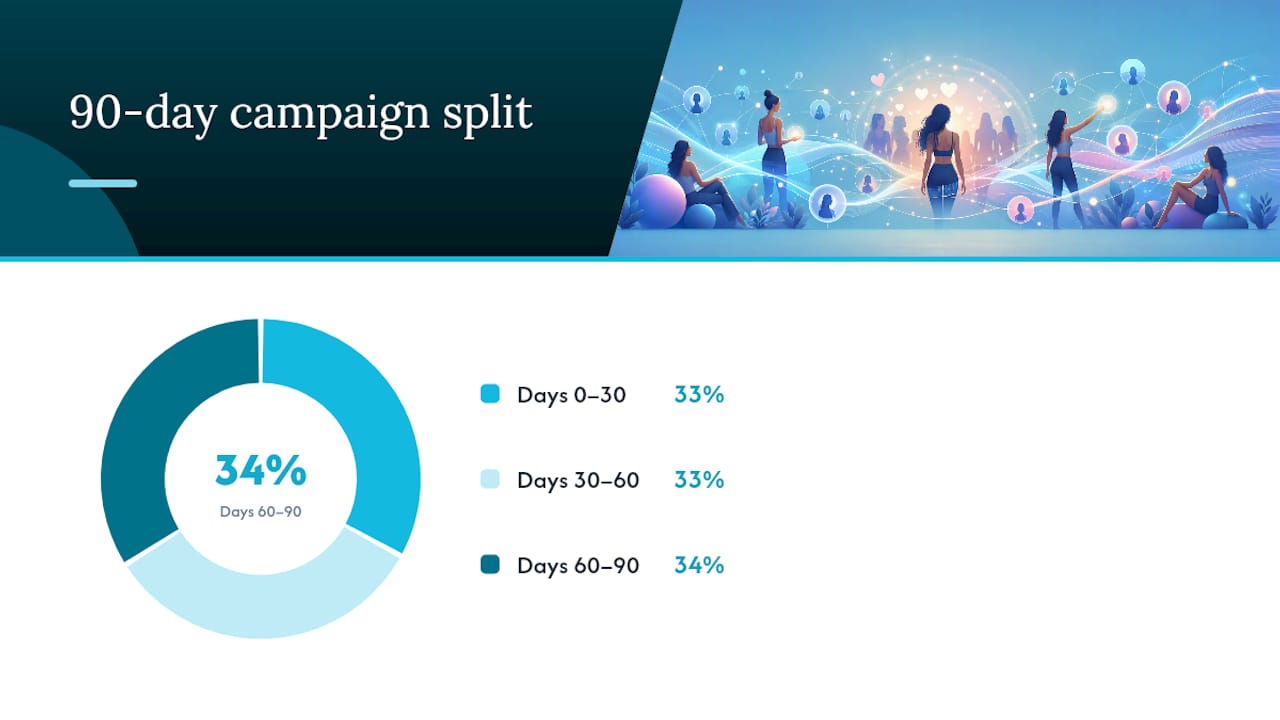
Start by setting three objectives: your target reactivation percentage, your revenue per send, and your 60-day retention goal. Pick one or two cohorts to test first rather than blasting your entire lapsed list at once.
The 90-day arc breaks into three phases:
Staffing for a mid-size creator typically needs a dedicated account manager, a chat team handling segmented outreach, a copywriter for message frameworks, and a data analyst tracking results weekly.
Mass messaging is the single highest-leverage tool available on OnlyFans, but only when it’s segmented. Broadcasting the same PPV to your entire subscriber base underperforms segmented sends by a wide margin, because a whale and a fan who canceled eight weeks ago need completely different messages.
Break your lapsed list into five groups:
Cap PPV sends at a low weekly frequency and interleave free engagement messages between them. Evening send windows tend to perform best, and anyone who unsubscribed in the last 48 hours should be excluded from immediate outreach entirely.
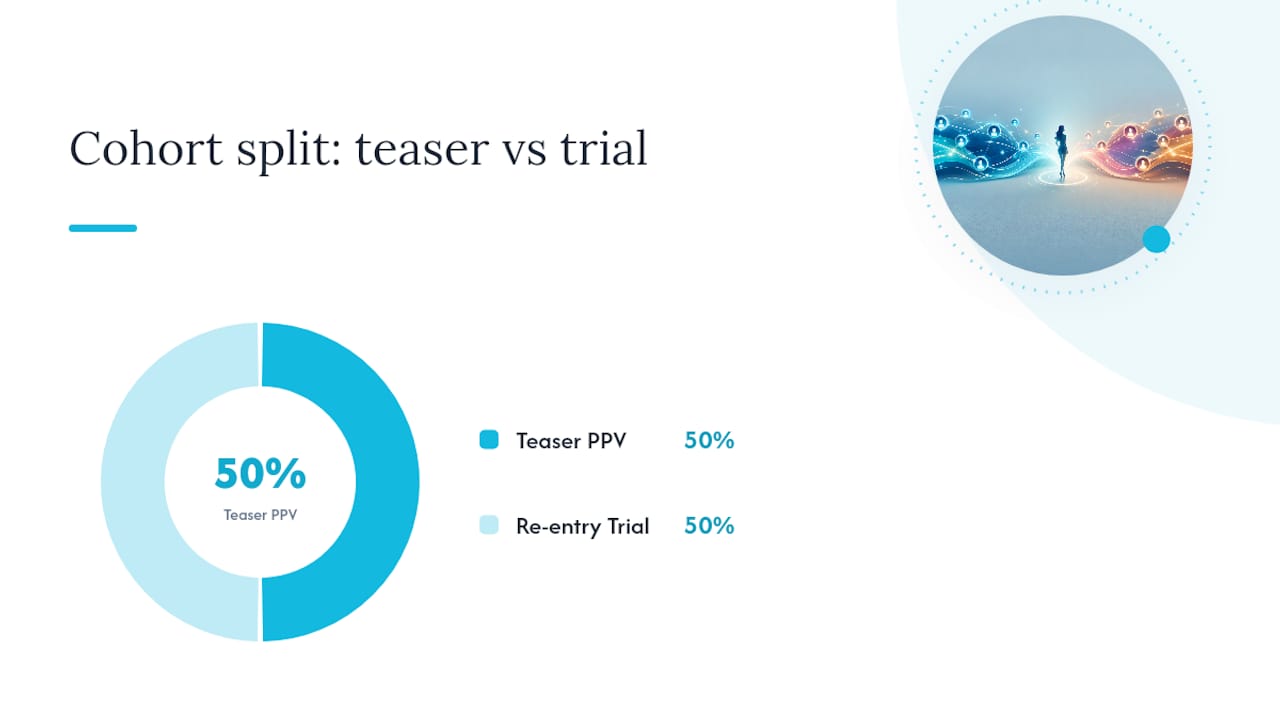
Pro Tip: Test a “teaser plus locked PPV” against a “limited re-entry trial” on the same cohort split in half. The winner tells you whether that group responds better to curiosity or urgency.
Generic mass offers convert at a fraction of what individually specific messages achieve, because a message referencing a subscriber’s actual history reads as recognition, not marketing.
Pull four data points before writing anything: which PPVs they unlocked, which content categories they viewed most, anything they said in chat, and their tenure and total spend. That’s your material.
A converting DM follows a simple anatomy:
Follow up once if there’s no response within 48 to 72 hours. If a whale-tier subscriber still doesn’t bite, that’s when a custom deal makes sense. For everyone else, step back after two attempts. Chasing too hard reads as desperate and can push a lapsed fan into blocking you entirely.
The trap most creators fall into is discounting so aggressively that returners expect the same price forever. The better approach is a re-entry offer framed as recognition of the relationship, not a permanent markdown.
Three offer structures work well:
Language matters here.
Pro Tip: Track 60-day retention on every reactivated account separately from your regular subscriber base. If a returner goes quiet again by day 45, that’s your signal to send a check-in message before day 60, not after.
Winback volume can overwhelm a solo chatter fast, which is why agencies run chat operations through a five-stage triage model: greetings, small talk, engagement, conversion moment, and soft close. Each stage calls for different handling.
| Triage stage | Who should handle it | AI appropriate? |
|---|---|---|
| Greetings | Junior chatter or AI-assisted | Yes |
| Small talk | Junior to mid-level chatter | Limited, with disclosure |
| Engagement | Mid-level chatter | No |
| Conversion moment | Senior chatter only | No |
| Soft close | Senior chatter | No |
A workable staffing pattern for 24/7 coverage uses a three-person rotation with one senior operator per shift, backed by an analytics owner and an account manager. Every chatter should work from a shared voice document so the creator’s tone stays consistent across shifts. AI earns its place in early-stage classification and routine replies, but conversion moments need a human who can read tone and adjust in real time. Daily handoffs and weekly metric reviews keep quality consistent across a rotating team.
Five numbers matter more than anything else: reactivation rate by cohort, revenue per send, 60-day retention, unsubscribe rate after each send, and revenue per active fan.
Run experiments the disciplined way: change one variable at a time (hook, price, or timing), never all three at once. A practical cadence is a two-week A/B test per cohort, with unsubscribe rate as your safety signal. If it spikes, stop and diagnose before scaling further.
Measurement without action is just a spreadsheet. The point of tracking revenue per send and retention is deciding what to cut and what to double down on.
Outsourcing makes sense once chat volume outpaces what one person can handle with care, or once revenue scale justifies dedicated staff testing offers systematically instead of reactively. That’s usually somewhere past the $5,000 to $10,000 monthly mark, where the opportunity cost of a creator doing chat personally starts outweighing agency fees.
A competent agency brings disciplined testing, staff who aren’t burned out from doing everything solo, and continuous optimization instead of a “set it and forget it” campaign. The pitfalls to watch for: agencies that over-discount to force short-term wins, skip personalization because it’s slower, or rush re-onboarding without preserving subscriber history. Those shortcuts recover a payment, not a relationship.
— Gjon
Some creators prefer to have a dedicated team run this playbook rather than manage it themselves late at night between shoots. Our approach starts with an audit of your subscriber data and churn patterns, then moves into a pilot campaign targeting your most recoverable cohorts before scaling to your full lapsed list.
The service includes an account manager, a chat team following a triage discipline, segmentation using spend and tenure data, and analytics tracking reactivation rate and revenue per send from the start. If you’re already running your own subscription retention efforts and hitting a ceiling on time or chat coverage, this is the next step. Reach out through our contact page to request a free audit of your current lapsed list and see what a pilot campaign could recover in the first 30 days.
For deeper tactical detail beyond this playbook, review the guidance on mass message cadence and PPV limits and the breakdown of native OnlyFans tooling limits that make third-party segmentation valuable. On the retention side, Only-dreams’s guide to stopping churn within 48 hours pairs well with the re-onboarding steps covered here.
Reactivation rate varies widely by cohort and offer quality, so track it by departure tenure rather than expecting one universal number. Recent cancels (0-8 weeks) typically recover at meaningfully higher rates than subscribers who churned months ago.
Cap PPV sends at two to three per week and interleave free engagement messages between them to avoid fatigue-driven unsubscribes.
No. A time-limited trial rate that explicitly reverts to standard pricing recovers subscribers without normalizing a permanently lower price.
AI works well for early-stage classification and routine replies, but conversion moments require a human chatter who can read context and adjust tone in real time.
Once chat volume or revenue scale outpaces what a creator can personally manage with care, typically once monthly revenue crosses the $5,000 to $10,000 range, agency support like Only-dreams’s account management and chat teams becomes worth the investment.