TL;DR:
- Social media marketing requires strategy, consistency, and authentic engagement to drive measurable results.
- Platforms like TikTok and niche content are key, with video dominating content consumption.
- Successful creators build owned audiences and episodic content to ensure long-term growth and revenue.
Social media marketing is not just posting content and hoping for the best. The game has shifted. Algorithms now reward strategy, consistency, and authentic engagement over raw output. If you’re an established creator and you’re still treating your social channels like a casual hobby, you’re leaving real money on the table. Setting SMART goals, audience research, and platform strategy are the foundation of modern social media marketing. This guide breaks down what social media marketing actually means today, which frameworks drive results, how to read the right metrics, and what separates creators who scale from those who stall.
| Point | Details |
|---|---|
| Strategy first | Effective social media marketing requires clear goals, audience understanding, and the right platform mix. |
| Leverage short-form video | Short-form and video content earn the highest engagement and should be a core focus for creators. |
| Diversify to reduce risk | Relying on multiple platforms and owned channels guards creators against algorithm changes. |
| Measure what matters | Prioritize metrics like engagement quality, saves, shares, and ROI over vanity numbers. |
| Authenticity wins | Real, community-focused content outperforms polished but inauthentic campaigns. |
Social media marketing (SMM) is the practice of creating, distributing, and amplifying content across social platforms to reach a target audience and drive specific outcomes. Those outcomes might be new subscribers, increased revenue, brand partnerships, or deeper fan engagement. It’s not just about visibility. It’s about generating measurable action.
Understanding social marketing basics starts with three pillars: knowing your audience, setting clear goals, and choosing the right platforms. Without those three in place, even great content underperforms.
Here’s what a successful SMM approach actually includes:
The difference between SMM and just posting is this: SMM is iterative. You test, measure, and refine. You’re not guessing.
| SMM Component | What it means for creators |
|---|---|
| Content creation | Producing platform-optimized posts, videos, and stories |
| Distribution | Scheduling and cross-posting for maximum reach |
| Engagement | Responding to comments, DMs, and community interactions |
| Analytics | Tracking performance data to guide future decisions |
| Monetization | Converting attention into revenue streams |
The scale of this matters. 68.9% of brands use 5+ social channels, and video now accounts for over 60% of all content consumption. That tells you two things: multi-platform presence is no longer optional, and if you’re not leading with video, you’re already behind. Creators who treat SMM as a strategic system rather than a content dump consistently outperform those who don’t.
Now that we understand the SMM basics, let’s look at how strategies are built and executed for real results.
The most effective creators use a structured approach. Here’s a proven process:
Platform selection is critical. Not every platform deserves equal attention.
| Platform | Avg. engagement rate | Best for |
|---|---|---|
| TikTok | 4.25% to 5.3% | Discovery, new audiences, viral reach |
| 1.5% to 3.5% | B2C, visual branding, story-driven content | |
| 0.06% to 0.5% | Paid campaigns, older demographics | |
| Growing 12.6% YoY | B2B, brand partnerships, professional credibility |
TikTok engagement strategies are worth studying closely because TikTok’s algorithm still rewards new creators more than any other platform. Short-form video boosts engagement significantly, with TikTok’s average engagement rate reaching up to 5.3%. That’s not a coincidence. It’s the result of a discovery-first algorithm that prioritizes content quality over follower count.
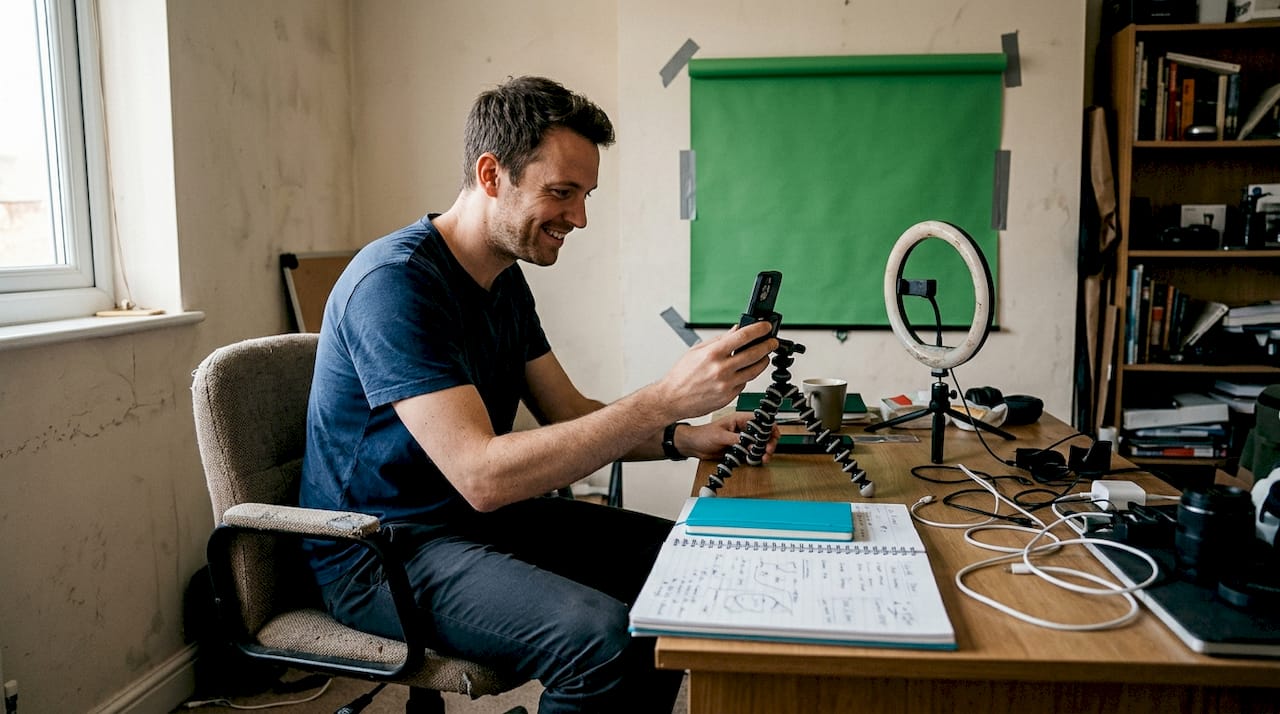
Pro Tip: Nano creators (1,000 to 10,000 followers) consistently outperform macro creators in engagement rate. A tighter, more loyal audience converts better than a massive but passive one. Niche down, and your content will punch above its weight.
For advanced SMM tips that go beyond the basics, the key is combining platform-specific tactics with a clear content calendar and consistent posting rhythm. Consistency signals reliability to both algorithms and audiences.
Once you know the frameworks and platform strengths, the next challenge is navigating constant changes and seizing new opportunities.
Algorithms have evolved significantly. Saves and shares now carry more weight than likes. Comments that spark conversation outperform passive reactions. Algorithm updates now prioritize engagement velocity and authentic interaction over raw follower counts, and AI-generated repetitive content sees measurable performance drops. That’s a direct signal: originality and genuine connection are your competitive advantage.
“The creators winning right now are not the ones posting the most. They’re the ones building real relationships with their audience through consistent, authentic content.”
Here are the biggest challenges creators face in 2026:
The opportunities are just as real. Authenticity is having a moment. Audiences are fatigued by polished, corporate-feeling content. Raw, honest, personality-driven posts perform better than ever. Short-form video continues to dominate discovery. And micro-niches are thriving because they attract highly engaged, conversion-ready audiences.
Pro Tip: Diversify your platform presence now, before you need to. If TikTok is your primary channel, start building on Instagram Reels and YouTube Shorts simultaneously. To maximize reach and revenue, you need multiple traffic sources working together.
With so much change, how can you measure what’s working and adapt quickly for better results?
The first step is dropping vanity metrics as your primary measure of success. Follower count and likes feel good, but they don’t pay bills. The metrics that actually matter are the ones tied to action and revenue.
Here’s how to build a smarter measurement system:
| Platform | Engagement rate | ROI indicator |
|---|---|---|
| TikTok | 4.25% to 5.3% | Discovery to subscription pipeline |
| 1.5% to 3.5% | B2C conversion, story-driven sales | |
| Growing 12.6% YoY | Partnership and brand deal revenue | |
| Video ads | 48% higher engagement | Direct response and paid campaigns |
TikTok’s engagement rate reaches 5.3%, instream video ads deliver 48% higher engagement, and the average social media ROI sits at $5.2 for every $1 spent. LinkedIn is growing 12.6% year over year. These are not abstract numbers. They’re benchmarks you can use to evaluate your own performance.
For account management for engagement, having someone dedicated to tracking and responding to these metrics daily makes a significant difference. And when you pair strong analytics with chatting strategies for sales, you create a feedback loop that continuously improves your revenue performance.

Pro Tip: Set a weekly 30-minute analytics review. Look at measuring success in SMM by comparing your top three performing posts to your bottom three. The gap between them tells you exactly what to do more of and what to stop.
Here’s the uncomfortable reality: most creators build their entire business on platforms they don’t control. One algorithm update, one account suspension, one policy change, and years of work can disappear overnight. That’s not pessimism. That’s just the risk profile of a social-first strategy without a safety net.
The creators who sustain long-term growth treat social media as a traffic source, not a home base. They use it to drive audiences toward owning your audience through email lists, newsletters, and community platforms they actually control.
Another thing most creators miss: episodic content. Treating your content like a TV series, with recurring themes, characters, or formats, dramatically improves retention. Audiences come back for the next episode. They share it. They wait for it. That’s a fundamentally different relationship than one-off viral posts.
The social-first future is real, but algorithms should not own your business model. Start a newsletter. Launch a series. Build a community you control. Use social to feed it, not replace it.
Understanding strategy is one thing. Executing it consistently while creating content is another challenge entirely.
At OnlyDreams Agency, we’ve helped creators turn solid content into scalable revenue through professional account management, strategic social media marketing, and 24/7 fan engagement. You can see exactly how that works in practice by reviewing the Stellar Vibe Digital Media case study and the Discovery of Era results. Real creators, real growth, real numbers. If you’re ready to stop guessing and start scaling, start with OnlyDreams and let’s build a strategy built around your goals.
TikTok leads for engagement rate, with 4.25% to 5.3% average ER, Instagram excels for B2C conversion, and LinkedIn is growing 12.6% year over year for B2B and brand partnerships.
Organic reach is shrinking fast, especially on Facebook where organic engagement sits at 0.06%, so creators should combine strong organic content with paid amplification and active engagement tactics.
Video is essential. It drives over 60% of content consumption and instream video ads deliver 48% higher engagement than other formats, making short-form video the highest-priority content type for any creator.
Focus on saves, shares, DMs, and conversion rates rather than likes or follower counts, since engagement beyond likes is what actually predicts revenue and audience loyalty.