
TL;DR:
- Content monetization involves turning digital content into income through various methods like advertising, sponsorships, and digital products. Diversifying three to five revenue streams and owning direct channels maximize income stability and growth. Building data-driven management and leveraging platform tools helps creators sustain and scale their earnings effectively.
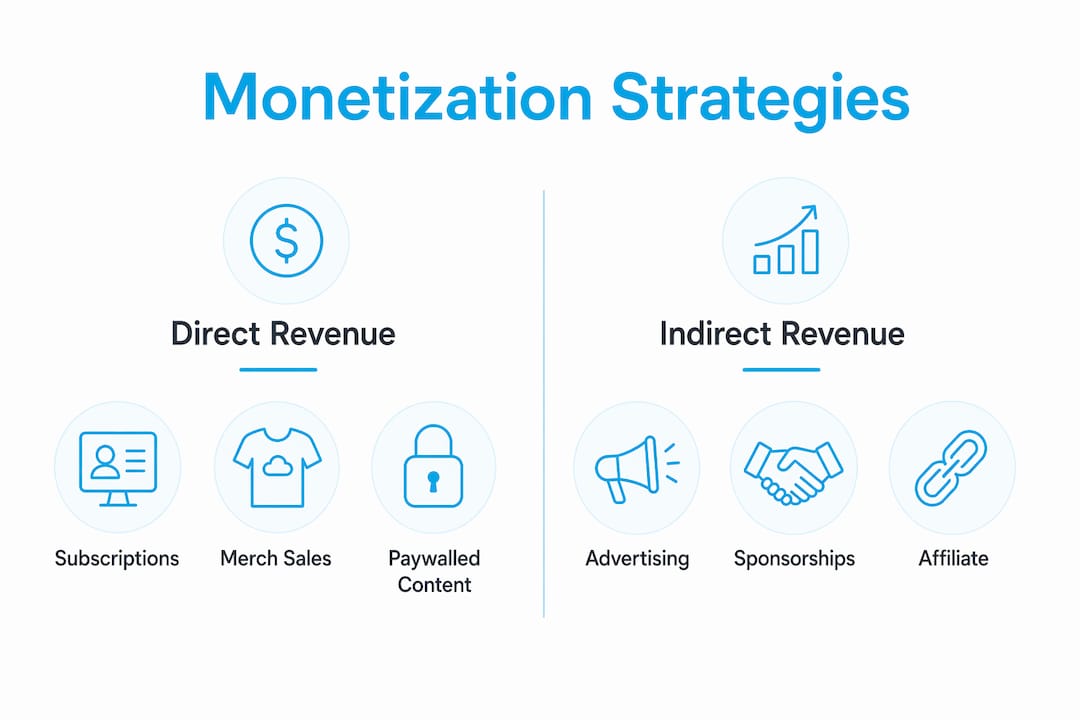
Content monetization is the process of converting your digital content into measurable income through advertising, brand partnerships, subscriptions, digital products, affiliate marketing, and licensing. The global creator economy was estimated at $250 billion in 2025, and platforms typically pay creators $3 to $5 per thousand ad views. Among creators with over 1 million followers, 46% earn $100,000+ annually, mostly through sponsorships.
Common monetization methods include:
Understanding all six gives you the foundation to build a real business, not just a side income.
The direct-to-creator model means owning your audience relationships and revenue channels outright, rather than depending on platform algorithms to deliver your income. When you sell through your own site, paid community, or direct messaging, you set the price, keep the margin, and build loyalty that no algorithm update can erase.
Key advantages of this approach:
Practical implementations include personal websites with paywalled content, paid Slack or Discord communities, and pay-per-view messaging on subscription platforms.
Pro Tip: Before migrating your audience to a direct channel, survey your most engaged followers about what exclusive content they would pay for. Presales and surveys validate demand before you invest time building the product, as outlined in creator management best practices.
Ad revenue is a useful baseline, but it is an unreliable primary income source. Display advertising click-through rates generally run between 0.22% and 0.52%, and widespread ad-blocker adoption cuts effective impressions further. Platforms typically pay creators $3 to $5 per thousand ad views, though YouTube RPM can range from $3 to $15 depending on niche, meaning you need massive, consistent traffic just to cover basic expenses.
Ad revenue also scales linearly. More views equals more money, but only if the algorithm keeps sending traffic your way. A single policy change or content strike can wipe out months of growth. Treat ad income as a floor, not a ceiling, and build higher-margin streams on top of it.
Creators with three to five revenue streams are far better protected against platform changes and algorithm shifts than those relying on one or two. Diversification is not just a safety net; it is how you scale.
Strong revenue streams to stack:
A creator with 1,000 engaged followers paying $10/month can earn $10,000 monthly, emphasizing that audience quality drives income—not raw follower count.
Pro Tip: Validate every new product idea before you build it. Run a presale, post a survey, or pitch the concept in a free post and measure replies. Skipping validation is the fastest way to spend weeks on something your audience will not buy. Learn more about stacking revenue streams effectively.

Only-dreams is a US-based creator management agency built specifically for established creators who want to grow earnings without burning out. The agency handles the operational side of your business so you can stay focused on creating.
Core services include:
| Service | Benefit |
|---|---|
| 24/7 chat management | Keeps fan engagement active around the clock without creator burnout |
| Dedicated account managers | Provides strategic oversight and revenue optimization |
| AI-enhanced marketing | Reduces workload while increasing content reach |
| Cross-platform growth | Builds audience across Instagram, TikTok, and beyond |
| Fan engagement teams | Converts followers into paying, loyal subscribers |
Outsourcing fan engagement and operational tasks lets you scale without adding hours to your day. Data-driven decisions replace guesswork, and your monetization performance improves as a result.
Several platforms give established creators direct tools to monetize their audiences:
Each platform takes a different cut and serves a different content format. Matching the platform to your content type and audience behavior matters more than chasing the highest follower count.
Subscriptions generate predictable, recurring revenue because fans commit to a monthly or annual fee in exchange for ongoing value. The model works best when you offer content your audience cannot find anywhere else: behind-the-scenes access, members-only tutorials, early product drops, or a private community.
Pricing tiers are common. A base tier might offer exclusive posts, while a premium tier adds direct messaging access or monthly live sessions. The key is making each tier feel worth the price, not just a paywall on content you would have posted anyway.
Branded merchandise and digital products give you a one-time or recurring revenue source that does not depend on platform payouts. Physical merchandise (T-shirts, mugs, prints) builds brand recognition every time a fan shares a purchase. Digital products (presets, templates, ebooks) carry near-zero fulfillment cost and can sell indefinitely.
Platforms like Shopify, Etsy, and WooCommerce handle storefronts, payments, and delivery. Print-on-demand services remove inventory risk entirely, letting you test designs before committing to bulk orders.
Sponsorships pay well when your audience aligns tightly with a brand’s customer profile. Brands are not just buying reach; they are buying trust. A smaller, highly engaged audience in a specific niche often commands stronger rates than a broad, passive one.
Pitch brands directly with a clear media kit: your audience demographics, engagement rates, content examples, and available formats (dedicated posts, integrations, long-term partnerships). Set pricing tiers and stick to them. Disclose every paid partnership clearly per FTC guidelines, which protects both your credibility and your legal standing.
Content monetization income is taxable in the United States. The IRS treats creator income as self-employment income, which means you owe both income tax and self-employment tax (currently 15.3% on net earnings up to the Social Security wage base). Quarterly estimated tax payments are required if you expect to owe $1,000 or more annually.
Keep records of every revenue stream separately: ad payouts, sponsorship fees, product sales, and affiliate commissions. Business expenses like equipment, software, and professional services are generally deductible. Consulting a CPA familiar with creator businesses is worth the cost.
Revenue without data is guesswork. Track these metrics across every stream:
Tools like Google Analytics, platform-native dashboards (YouTube Studio, Patreon analytics), and email platform reports give you the data to identify what is working and where to double down.
Content monetization works best when you combine direct-to-creator ownership, three to five diversified revenue streams, and data-driven management to protect and grow your income.
| Point | Details |
|---|---|
| Diversify revenue streams | Creators with 3–5 income sources are far more protected against platform and algorithm changes. |
| Direct-to-creator model | Owning your audience relationships gives you 100% control over pricing and brand identity. |
| Ad revenue is a baseline | Platforms pay creators $3 to $5 per thousand ad views; display ad CTRs run between 0.22% and 0.52%, so treat ad income as a floor, not a primary source. |
| Audience quality over size | 1,000 engaged followers paying $10/month generates $10,000 monthly, highlighting that niche expertise and engagement outperform large passive audiences. |
| Professional management scales results | Outsourcing fan engagement and operations lets you grow revenue without adding hours to your workload. |