
Run a mixed-method audience analysis combining platform analytics, direct follower feedback, and an AI persona generator, then update those personas monthly. Creators who do this consistently produce content that converts followers into paying subscribers, not just passive viewers.
Your one-week action checklist:
After your first run, expect three concrete deliverables: one platform to prioritize for growth, two content hooks your audience responds to most, and one distribution change (posting time, format, or channel) worth testing immediately.
Pro Tip: Take one short interview transcript from a real follower conversation and paste it into an AI persona generator. The specific language your follower uses, their exact words about what they want, will make your persona far more realistic than any template default.
A mixed-method audience analysis combining platform analytics, direct follower feedback, and AI persona tools is the most reliable way for creators to build content strategies that convert followers into paying subscribers.
| Point | Details |
|---|---|
| Mix your methods | Combine analytics, surveys, and interviews; no single source gives you the full picture. |
| Validate AI personas | Always check AI-generated personas against real follower language and your top-performing posts before acting on them. |
| Minimum sample size | Collect at least 20 survey responses and 3 interviews before building a persona you will use in campaigns. |
| Review monthly | A 30-minute monthly check against fresh analytics and follower feedback keeps personas accurate as your audience evolves. |
| Only-dreams option | Only-dreams offers done-for-you audience analysis, persona development, and 24/7 persona-driven chat management for creators earning $3k+/month. |
Audience analysis (the German term Zielgruppenanalyse is widely used in creator marketing) is the process of turning raw follower data into defined audience segments and named personas you can actually use to plan content. It is not the same as knowing your broad target demographic. A Zielgruppenanalyse produces specific, usable outputs.
Concrete outcomes you should expect:
The inputs that feed this process are platform analytics, direct interviews and surveys, and social listening. Three platforms provide the most reliable native data for creators: Google Analytics tracks traffic sources and conversion paths from your link-in-bio or website; TikTok Analytics reveals how your content gets discovered and which videos drive new followers; Meta’s Instagram Insights gives you demographic breakdowns and engagement patterns across posts and Stories.
Posting without a clear audience picture is expensive in time and reach. Creators who know exactly who they are talking to write captions that convert, choose formats their audience prefers, and time their promotions when their subscribers are most likely to buy.
The practical payoffs are direct:
Consider three quick use-cases. Launching a new content series? Audience analysis tells you which format (long-form video, short clips, photo sets) your most loyal segment prefers before you invest production time. Trying to convert followers to subscribers? It surfaces the objections and motivators that move fence-sitters. Running paid ads for a creator product? It cuts wasted spend by targeting only the segments with demonstrated purchase intent.
Different methods answer different questions. Surveys tell you what your audience says they want. Interviews reveal why they want it, in their own words. Behavioral analytics show what they actually do. Social listening captures what they say about your niche when you are not in the room.
| Data Source | What It Reveals | Best Use Case |
|---|---|---|
| Google Analytics | Traffic sources, conversion paths, bounce behavior | Understanding which platforms drive real website or link-in-bio traffic |
| TikTok Analytics | Content discovery patterns, follower growth triggers | Identifying which video formats and topics attract new audiences |
| Instagram Insights | Demographics, reach, engagement by post type | Follower analysis on Instagram for demographic segmentation |
| Follower surveys | Stated preferences, content wishes, objections | Validating assumptions before launching a new series or product |
| 1:1 interviews | Motivations, language, emotional drivers | Building realistic persona language and messaging hooks |
| Social listening | Niche conversations, competitor gaps, trending topics | Spotting content angles your audience cares about but no one covers well |
When to use an AI persona generator vs. manual synthesis: Use an AI generator when you need a structured starting point fast, especially if you have at least a few survey responses or interview notes to feed it. Manual synthesis is worth the extra time when your audience is niche enough that generic AI outputs miss the mark. The best workflow combines both: generate a draft persona with AI, then stress-test it against real responses.
AI persona tools improve significantly when they ingest actual user inputs like interview transcripts or survey responses, producing living, collaborative persona documents rather than static templates. That distinction matters practically: a persona built from your follower’s own words will guide your content decisions far better than one assembled from demographic averages.
Pro Tip: Validate any AI-generated persona with two quick real-user checks: (1) share the persona description with one actual follower and ask if it sounds like them, and (2) compare the persona’s stated content preferences against your top-performing posts in analytics. If they conflict, trust the analytics.
Creator-oriented tools like HeyLillian’s audience portrait tool go further by combining platform-level demographic signals with psychographic models and engagement-quality scoring, which is useful when you need to evaluate brand-fit or partnership potential alongside your own audience work.
This process runs in roughly three weeks for a solo creator working part-time on it. Each step has a clear output you hand to your content planner or ad manager.
Define your goals and ideal audience profile (Day 1). Write down one specific question you want the analysis to answer (e.g., “Which segment is most likely to upgrade to my premium tier?”). This keeps the whole process focused. Output: a one-paragraph goal statement.
Audit your platform analytics (Days 1–3). Pull 90 days of data from TikTok Analytics, Instagram Insights, and Google Analytics. Note your top five posts by engagement, your audience’s age and location breakdown, and your peak posting times. Output: a one-page analytics summary.
Recruit feedback participants (Days 3–5). Ask your most engaged followers (commenters, DM senders, repeat viewers) to complete a short survey or join a 15-minute call. Aim for at least 20 survey responses and 3–5 interview participants for a reliable signal. Output: a confirmed participant list.
Run your survey and interviews (Days 5–14). Use a five-question survey covering content preferences, platform habits, goals, and frustrations. In interviews, ask open-ended questions and let participants talk. Record with permission. Output: raw survey data and interview notes.
Synthesize your segments (Days 14–17). Group survey and interview responses by common themes. Look for two or three distinct clusters: people who share similar goals, frustrations, and content preferences. Name each cluster. Output: two to three labeled segments with supporting quotes.
Build your personas (Days 17–19). For each segment, create a named persona using a tool like HubSpot’s Make My Persona, which generates structured templates covering demographics, goals, pain points, and preferred channels from plain-language input. Alternatively, feed your interview notes into an AI builder for a fast first draft. Output: one to three completed persona documents.
Test and activate (Days 19–21). Create one piece of content specifically for your primary persona. Track its performance against your baseline for two weeks. Share the persona and content brief with your content planner or chat manager. Output: a live content test with a defined KPI to watch.
For AI-assisted marketing workflows that connect persona outputs directly to campaign execution, the handoff at Step 7 is where most creators lose momentum. Build the handoff document before you finish Step 6.
Persona generators:
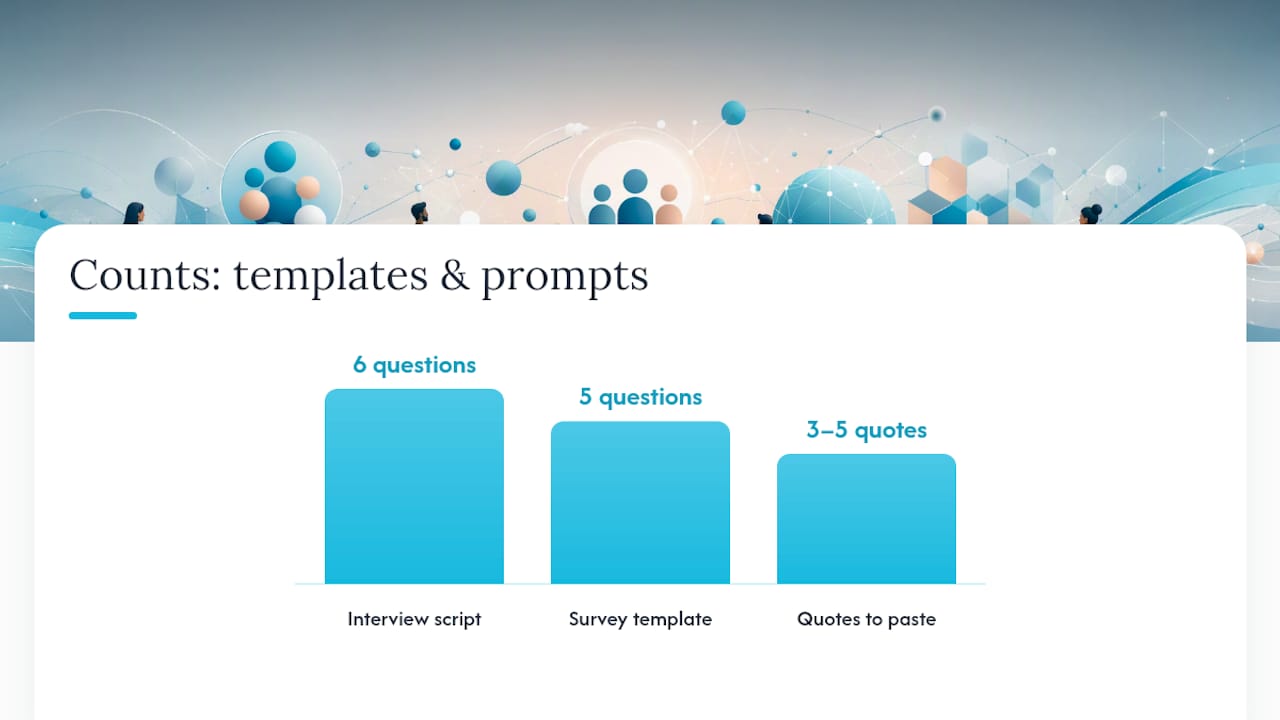
Survey template (5 questions for followers):
Interview script (6 questions):
Quick usage tip for AI generators: Paste three to five direct quotes from your survey responses or interview notes into the input field rather than a generic description. The output will use your audience’s actual language, which makes the persona immediately more useful for writing captions and hooks.
For creators who want to connect persona work to automated marketing execution, the persona document becomes the brief that feeds your content calendar and chat scripts.
Set realistic expectations before you start. Audience analysis does not produce overnight results, but the signals come in faster than most creators expect if you track the right metrics.
Core metrics by objective:
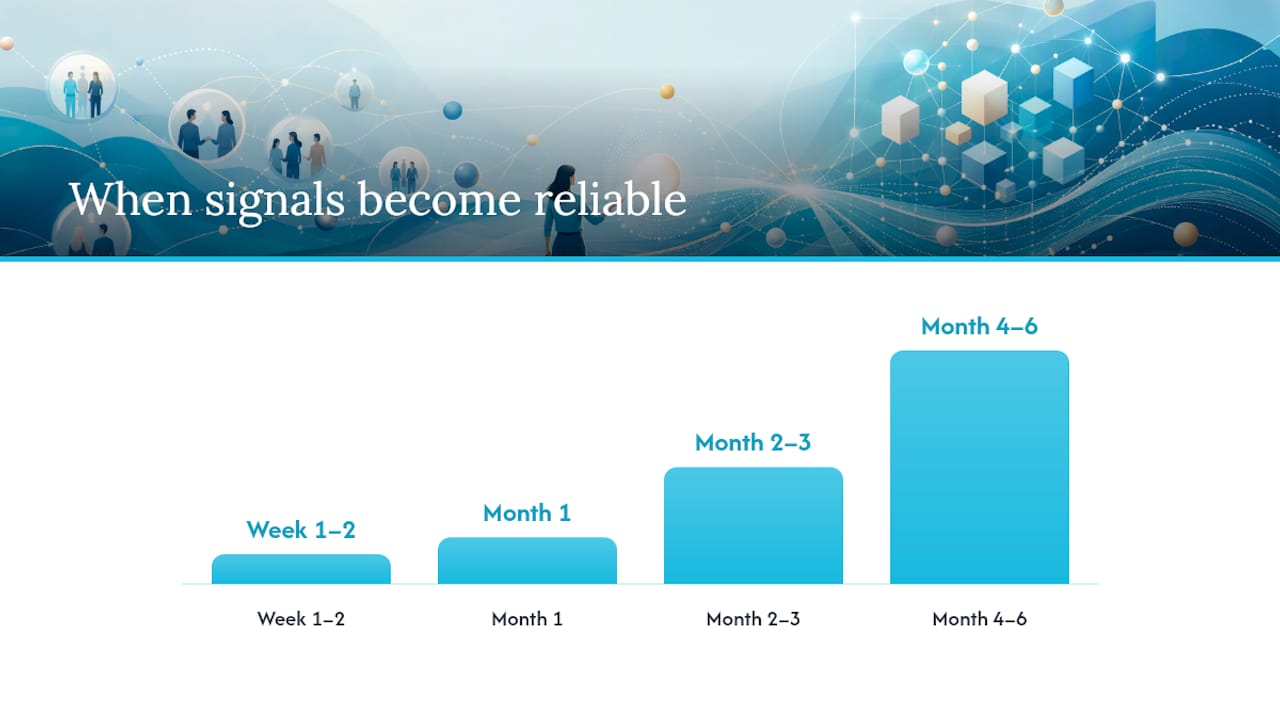
| Timeline | Signal to Watch | Realistic Expectation |
|---|---|---|
| Week 1–2 | Engagement rate on persona-targeted posts | Early directional signal; not statistically conclusive |
| Month 1 | Follower-to-subscriber conversion rate | First meaningful data point; adjust persona if conversion is flat |
| Month 2–3 | Subscriber retention and ARPU | Reliable signal that content strategy is aligned with audience |
| Month 4–6 | Organic reach growth and referral traffic | Longer-term indicator of audience-algorithm fit |
Cost expectations:
For reliable signals, aim for at least 20 survey responses and 3 interviews before building your first persona. Below that threshold, patterns are too thin to act on confidently.
Here is a filled example persona you can copy and adapt.
Persona: “Ambitious Alicia”
30-day activation plan tied to this persona:
KPI to watch each week: follower-to-subscriber conversion rate and DM response rate. If Week 2’s personalized DMs produce a conversion rate above your baseline, the persona’s buying trigger assumption is validated. If not, revisit the trigger language in your next interview round.
For subscription creators, chat strategy is where persona insights about communication style and buying triggers translate directly into revenue.
A creator came to Only-dreams earning a steady but plateaued income, with strong follower counts on TikTok and Instagram but low subscription conversion. The challenge was clear: large reach, weak monetization. The audience was there; the connection between content and paid conversion was not.
Only-dreams ran a focused audience analysis over three weeks. The process combined a 90-day analytics audit across TikTok Analytics and Instagram Insights, a short survey sent to the creator’s most engaged followers, and five brief interviews with existing subscribers. The team used HeyLillian’s creator portrait tool to layer psychographic signals onto the demographic data, producing an engagement-quality score that revealed which follower segments had the highest brand-fit and purchase intent.
The synthesis produced two primary personas. One segment, the high-intent superfan, responded to personal, behind-the-scenes content and direct DM outreach. The second, a casual browser, needed a stronger content hook before they would consider subscribing. The agency restructured the creator’s content calendar around the first persona and built a chat script for the second.
The most valuable output was not the persona document itself. It was the specific language the superfan segment used to describe what they wanted. That language went directly into the creator’s captions, DMs, and subscription page copy, and conversion improved within the first month.
Takeaways other creators can apply:
The most common error is treating analytics as the whole picture. Engagement rate tells you what performed; it does not tell you why, or what your audience actually wants next. Creators who build personas from analytics alone end up with demographic shells, not real audience insight.
Common mistakes and what to do instead:
How to detect a stale persona: If your top-performing content no longer matches what your persona predicts should work, or if your survey responses start contradicting the persona’s stated preferences, it is time to revalidate. A monthly check against your latest analytics and one or two quick follower conversations is usually enough to catch drift early. For content optimization that stays aligned with your audience, persona freshness is the prerequisite.
Use this checklist the first time you run a full analysis, or when revalidating an existing persona.
Pass/fail threshold before activation: If you have fewer than 20 survey responses or fewer than three interviews completed, do not proceed to persona building. The pattern recognition at that sample size is unreliable. Collect more data first.
Most creators treat audience analysis as a one-time project they run when growth stalls. That framing is the problem. The creators who grow consistently treat persona work as an ongoing operational habit, not a diagnostic tool.
Here is the trade-off I see most often: a creator has two hours free and must choose between producing another piece of content or updating their persona based on last month’s data. Almost every creator chooses production. That is usually the wrong call. One hour spent reviewing what your audience told you last month will make the next ten pieces of content more effective than producing an eleventh piece of content on autopilot.
The insider shortcut worth knowing: you do not need a full reanalysis every month. A 30-minute review of your top five comments, your latest DMs, and your analytics summary is enough to catch meaningful shifts. Build that into your monthly routine before you plan your content calendar, not after.
Established creators earning $3,000 or more per month often know their audience intuitively but lack the time or systems to translate that intuition into a structured, repeatable analysis. That gap is exactly where Only-dreams operates.
Only-dreams provides done-for-you audience analysis as part of its full account management service: analytics audits, persona development, AI-assisted consumer profiling, and 24/7 chat management built around the personas your audience actually responds to. The chat team uses persona language directly in fan conversations, which means every subscriber interaction is informed by real audience data, not generic scripts. For agencies that need white-label chat support, the same data-driven approach applies at scale.
This service fits creators who are already earning and want to grow faster without spending more hours on strategy. If you are ready to turn your audience data into a content and revenue plan that runs without you managing every detail, talk to the Only-dreams team about what a managed audience analysis looks like for your account.