TL;DR:
- Content creators produce original digital media that significantly influence public trust and brand recall. They build authentic relationships with audiences and deliver 23% higher Brand Memory Lift than traditional advertising. To succeed long-term, creators need professional systems to manage workload and maintain authenticity.
Content creators are defined as individuals who produce and distribute original digital media, including videos, written posts, podcasts, and images, to engage audiences across social platforms. The role of content creators in social platforms extends well beyond entertainment. Creators drive brand awareness, shape public opinion, and build communities that traditional advertising cannot reach. The global influencer marketing market reached over $32 billion in 2025, growing 35% year over year. That figure signals a fundamental shift: creators are now a core pillar of modern marketing, not a supplemental channel.
Creators build trust through authenticity. They share personal stories, respond directly to comments, and show unfiltered versions of their lives. This personal connection is something a press release or a 30-second TV spot cannot replicate. Research confirms that creators build trust through relatability by sharing lived experiences that foster genuine audience bonds, often surpassing traditional journalists in certain contexts.
Journalists operate under editorial standards, fact-checking protocols, and institutional accountability. That rigor makes journalism credible for hard news. Creators, by contrast, operate with fewer formal constraints, which gives them the freedom to be personal and immediate. A creator talking about a health scare from their own experience reaches audiences that a medical journal article never will.
The trust dynamic gets complicated when money enters the picture. Creators who engage in transparent critiques, sometimes called “deinfluencing,” can increase audience trust through honest criticism. That trust drops sharply if the same creator later accepts a sponsorship from the brand they criticized. Audiences notice the contradiction, and credibility suffers.
For brands, the implication is clear. Partnering with a creator whose values genuinely align with your product produces stronger results than chasing follower counts. Authenticity is the asset, and it is fragile.
Pro Tip: Before signing a creator partnership, audit their last 90 days of content. Look for consistency in tone, topic, and audience engagement. A creator who posts sporadically or pivots topics frequently is a higher credibility risk.
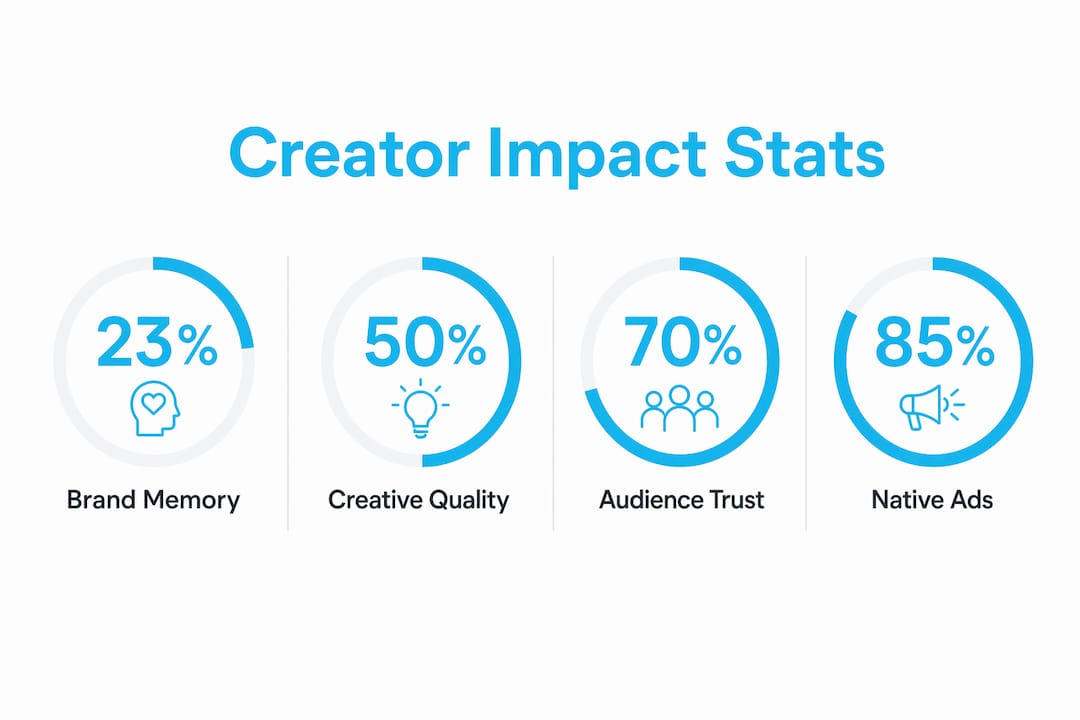
Creator-led advertisements deliver 23% more Brand Memory Lift than traditional brand ads on short-form video platforms. Brand Memory Lift measures how well an audience remembers a brand after seeing an ad. A 23% advantage is not marginal. It means creator content is structurally better at making brands stick in people’s minds.
The reason is not follower count. Creative quality, brand fit, and creator relevance drive the result. A creator with 50,000 highly engaged followers in a specific niche can outperform a celebrity with millions of passive followers. Smaller creators with high brand fit and entertaining content consistently outperform larger creators in brand memory impact. That finding reshapes how marketers should allocate budgets.
Marketers are also shifting away from vanity metrics like likes and views. Brand Memory is now the reliable measure of creator ad effectiveness. A post that gets 10,000 likes but leaves no lasting impression of the brand has failed its marketing purpose. A post that gets 3,000 views but drives measurable brand recall has succeeded.
Pro Tip: When briefing creators, give them creative freedom within clear brand guidelines. Ads that feel native to a creator’s style outperform heavily scripted content because audiences can tell the difference immediately.
| Marketing Factor | Traditional Ads | Creator-Led Ads |
|---|---|---|
| Brand Memory Lift | Baseline | 23% higher |
| Audience trust | Moderate | High (when authentic) |
| Content format | Polished, scripted | Native, personal |
| Best performance driver | Production budget | Creative quality and brand fit |
Content creators are not just people who post videos. The modern creator operates as a one-person media company, handling multiple professional functions simultaneously. Modern content creators perform content production, multi-platform distribution, community engagement, and strategic brand integration as core daily responsibilities.
The three primary creator archetypes each carry distinct responsibilities:
Independent creators own their audience and brand entirely. They control content strategy, monetization, and platform selection. Revenue comes from brand partnerships, platform funds, merchandise, and digital products like courses or subscriptions. The upside is full creative control. The downside is full operational responsibility.
UGC (user-generated content) creators produce content for brands without necessarily publishing it to their own channels. Brands use this content in paid ads, product pages, and social feeds. UGC creators are paid for production quality and authenticity, not audience size. This model has grown rapidly because brands get creator-style content without the creator’s audience requirements.
In-house social media managers function as creators within a company structure. They manage brand accounts, produce content on a schedule, and adapt messaging across platforms. They operate with brand guidelines as their primary constraint.
“The most effective creators act as cross-platform operations, adapting content for varying audience preferences on TikTok, Instagram, LinkedIn, and beyond. Creators who master this adaptation sustain audience attention better and build stronger, lasting brand memories across diverse social ecosystems.”
Multi-platform expertise is now a baseline requirement. Creators who adapt content for different platforms avoid audience fragmentation and maximize reach. A short-form video that works on TikTok needs reformatting for Instagram Reels and a different approach entirely for LinkedIn. Creators who treat all platforms as identical lose audience on each one.
The professional demands are significant. Content creators face intense pressures that often go unspoken, including constant production demands, algorithm dependency, and blurred personal and professional boundaries that lead to burnout. That reality rarely appears in the “dream job” narrative around content creation. Sustainable output requires systems, boundaries, and often professional support. Reviewing creator management best practices can help creators build those systems before burnout forces the issue.
Content creators have become trusted intermediaries in public health communication. Creators partner with public health experts to combat misinformation and share evidence-based science with diverse audiences who would never engage with a government health website or academic paper. That reach is the point. Creators access demographics that formal institutions consistently fail to engage.
The techniques that work best fall into two categories:
Training programs that teach creators to communicate health information accurately have shown measurable improvements in content quality and audience comprehension. Creators are pivotal in public health efforts because they reach diverse audiences with engaging, evidence-based content that institutional channels cannot replicate.
The dual challenge is real. The same platform dynamics that make creators effective at spreading good information also make them capable of spreading bad information. Algorithm incentives reward engagement, and false or alarming content often generates more engagement than accurate content. Creators carry a platform responsibility that most have not been formally trained to handle.
Pro Tip: If you create content in health, finance, or any high-stakes niche, build a habit of citing sources directly in your captions or video descriptions. It signals credibility and gives your audience a path to verify your claims independently.
The role of content creators in social platforms is defined by their ability to build authentic audience trust, drive measurable brand results, and shape societal conversations at a scale that traditional media cannot match.
| Point | Details |
|---|---|
| Trust through authenticity | Creators outperform traditional ads when their content reflects genuine values and lived experience. |
| Brand Memory over vanity metrics | Creator ads deliver 23% more Brand Memory Lift than traditional brand ads on short-form platforms. |
| Multi-platform adaptation | Creators who tailor content for each platform sustain stronger audience attention and brand recall. |
| Burnout is a real professional risk | Algorithm dependency and constant production demands make sustainable systems a necessity, not a luxury. |
| Public health responsibility | Creators who use prebunking and debunking techniques play a measurable role in reducing misinformation spread. |
The conversation about content creators tends to focus on reach and revenue. What gets less attention is the weight of responsibility that comes with a large, trusting audience. I’ve watched creators with genuine expertise get drowned out by louder voices with worse information, simply because the algorithm rewarded the emotional hook over the accurate one. That is the real tension in this space.
The creators who build durable influence share one trait: they treat their audience as people worth respecting, not numbers worth chasing. They invest in effective creator branding that reflects who they actually are, not who the algorithm seems to reward this week. That consistency compounds over time in a way that trend-chasing never does.
The mental health dimension also deserves more direct conversation. Burnout is not a personal failure. It is a predictable outcome of a system that demands constant output with no guaranteed return. Creators who build operational support around themselves, whether through agencies, tools, or team members, outlast those who try to do everything alone. The data on social media marketing strategies consistently shows that creators who plan ahead outperform those who react to trends.
The future of this industry belongs to creators who combine authenticity with professional discipline. That combination is rarer than it sounds, and it is exactly what makes those creators worth following.
— Gjon
Scaling a creator business requires more than great content. It requires professional systems that handle the operational side so you can stay focused on creating.
Only-dreams is a US-based creator management agency that handles account management, 24/7 fan engagement, and data-driven marketing across Instagram, TikTok, and other platforms. The team at Only-dreams builds authentic fan relationships that grow subscription and messaging revenue without adding to your workload. If you are ready to treat your content business like a business, explore creator management services at Only-dreams and see what professional support actually looks like in practice.
Content creators produce and distribute original digital media to engage audiences, build communities, and drive brand awareness across social platforms. Their role spans content production, community management, brand partnerships, and multi-platform distribution.
Creator-led ads deliver 23% more Brand Memory Lift than traditional brand ads, with creative quality and brand fit being the strongest performance drivers, not follower count.
Creators build trust through personal storytelling and direct audience interaction, which creates emotional connections that polished institutional content rarely achieves.
Constant production pressure, algorithm dependency, and blurred personal and professional boundaries are the leading causes of creator burnout, according to Cornell research published in 2026.
Creators partner with public health experts to reach diverse audiences using prebunking and debunking techniques, spreading evidence-based information through formats that formal health institutions cannot replicate effectively.