
TL;DR:
- Content strategy is a documented plan that guides creators on audience, goals, and messaging. It aligns content with business objectives and improves consistent growth. Regular reviews and clear pillars maximize reach and engagement over time.
Content strategy is defined as a documented plan that outlines who your content is for, what it should achieve, and how it stays consistent over time. Every creator and marketer who publishes without one is essentially guessing. A well-built content strategy aligns every post, video, and message with a specific business goal, whether that is growing subscribers, increasing revenue, or building brand authority. The difference between creators who grow predictably and those who plateau almost always comes down to whether they have a real strategy or just a posting habit.
Content strategy is the operational backbone that determines who your content serves, why it exists, and how it produces measurable outcomes. It goes far beyond a calendar or a posting schedule. Content strategy defines audience, purpose, and measurable goals, turning random output into an intentional system. That distinction matters because without it, even high-quality content fails to build momentum.
The importance of content strategy shows up most clearly when creators try to scale. Without a documented plan, every piece of content requires a fresh decision about topic, format, tone, and channel. That decision fatigue slows production and creates inconsistency. A strategy removes those repeated decisions by setting the rules in advance.
For marketers, the stakes are equally high. Content that does not align with business objectives wastes budget and attention. A clear strategy connects each content decision to a goal, making it possible to measure what works and cut what does not.
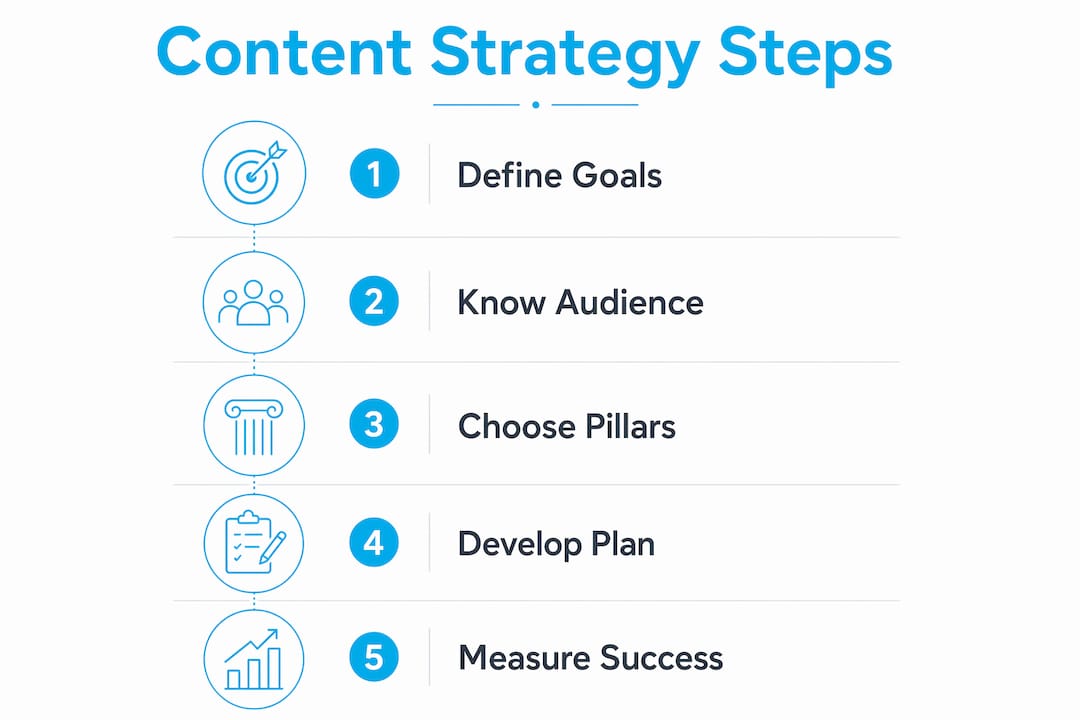
Five pillars define every effective content strategy. Each one answers a different question about your content operation.
| Pillar | Core question | Example |
|---|---|---|
| Purpose and goals | Why does this content exist? | Grow paid subscribers by 20% |
| Audience and topics | Who is it for, and what do they need? | Fans seeking exclusive behind-the-scenes content |
| Formats and channels | How and where is it delivered? | Short-form video on TikTok, long-form on subscription platform |
| Governance | Who owns the workflow? | Dedicated account manager reviews before publishing |
| Measurement | How is success tracked? | Watch time, conversion rate, subscriber growth |
Building a content strategy does not require a marketing degree. It requires clarity, consistency, and a willingness to track results.
Set clear, measurable goals. Start with the outcome you want. “Post more” is not a goal. “Increase subscription revenue by 15% in 90 days” is. Goals shape every decision that follows.
Define your audience. Go beyond demographics. Identify what your audience struggles with, what they enjoy, and how they behave on each platform. The more specific your audience profile, the more relevant your content becomes.
Research keywords and topics. Use platform search tools and analytics to find what your audience is already looking for. Topic research prevents you from creating content nobody wants.
Choose 3–5 content pillars. Content pillars are the core themes that guide all your creations. They remove decision fatigue and create consistent, integrated messaging instead of ad hoc posts. A fitness creator might use pillars like training tips, nutrition, mindset, and fan Q&A.
Build a content calendar. Map your pillars to a publishing schedule. Planning cycles of 30–90 days give you enough structure to stay consistent without locking you into a rigid plan that cannot adapt.
Publish and distribute. Publishing is only half the job. Actively promote content through stories, cross-platform sharing, and direct fan engagement to extend its reach.
Track, measure, and refine. Review your metrics weekly and conduct a full strategy review every 3–6 months. Adjust for what resonates and cut what does not.
Pro Tip: Write your strategy in a single document you can update. A living document beats a perfect plan that never changes.
The most effective content strategies in 2026 follow a clear content mix. A recommended ratio is 60% short-form video, 30% long-form content, and 10% community interaction such as stories and polls. That split reflects where audience attention actually lives across platforms like TikTok, Instagram, and subscription services.

Mapping content to customer awareness levels is one of the most underused practices. Aligning content with awareness stages, from Problem Aware through Solution Aware to Most Aware, ensures each piece speaks to where the audience is in their decision process. A creator who only posts promotional content misses the majority of their audience who are not yet ready to buy.
Relevance beats volume every time. Prioritizing audience pain points and using platform analytics like watch time and conversion metrics produces better results than simply posting more. One well-targeted video that solves a specific problem outperforms five generic posts.
Sustainability is the factor most creators overlook. A content strategy that demands daily long-form video from a solo creator will collapse within weeks. Choose formats and frequencies you can maintain without burning out. Consistency over six months beats intensity over two weeks.
Pro Tip: Use platform analytics to identify your top three performing content types before planning your next 30-day cycle. Build from what already works.
These three terms get used interchangeably, but they describe different layers of the same operation.
A creator who has a calendar but no strategy knows when to post but not why. That gap produces content that feels busy but does not build toward any goal. Strategy comes first. Everything else follows from it.
Pro Tip: If you cannot explain in one sentence why a piece of content exists and who it serves, it does not belong in your plan.
A documented content strategy is the single most effective tool for turning inconsistent posting into predictable, measurable growth.
| Point | Details |
|---|---|
| Strategy is not a calendar | Content strategy defines goals, audience, and pillars. A calendar only schedules what the strategy has already decided. |
| Use 3–5 content pillars | Pillars remove decision fatigue and keep messaging consistent across every platform and format. |
| Follow the 60/30/10 content mix | Allocate 60% to short-form video, 30% to long-form content, and 10% to community interaction for maximum reach. |
| Review every 3–6 months | Regular strategy reviews keep your content aligned with audience behavior and platform algorithm changes. |
| Measure what matters | Track engagement rate, watch time, conversions, and audience growth to know what is working and what to cut. |
Most creators I talk to believe they need more content. What they actually need is more clarity. When I started working closely with creators on their growth, the pattern was obvious. The ones posting every day without a plan were exhausted and stagnant. The ones with a clear strategy, even a simple one, were growing steadily and enjoying the process more.
Content strategy does something that no amount of hustle can replicate. It gives you permission to say no. When you have defined pillars and a clear audience, you stop chasing every trend and start making deliberate choices. That focus compounds over time in ways that random posting never does.
The biggest mistake I see is treating strategy as a one-time document. Creators build a plan in January and never look at it again. Audience preferences shift, algorithms change, and platforms evolve. A strategy that does not get reviewed every few months becomes a liability, not an asset. Treat it as a living document you return to regularly.
The creators who grow consistently are not the most talented or the most prolific. They are the most intentional. Strategy is what makes intention visible and measurable.
— Gjon
Building a content strategy is one thing. Executing it consistently while managing fan engagement, platform growth, and revenue is another challenge entirely. Only-dreams works with established creators to handle the operational side of their business, from content promotion to 24/7 chat management and data-driven marketing across Instagram, TikTok, and subscription platforms.
Only-dreams provides dedicated account managers, trained chat teams, and AI-enhanced marketing as an add-on to reduce creator workload and increase reach. If you are ready to move from random posting to a real growth system, explore what Only-dreams offers and see how professional management turns strategy into consistent revenue.
Content strategy is a documented plan that defines who your content is for, why it exists, and how it achieves specific business or marketing goals. It goes beyond scheduling to govern audience targeting, content formats, distribution channels, and success metrics.
Start by setting a measurable goal, defining your audience, and choosing 3–5 content pillars that reflect your core themes. Then build a content calendar, publish consistently, and review your metrics every 30–90 days to refine the plan.
The main types include awareness-focused strategies that attract new audiences, engagement-focused strategies that build community, and conversion-focused strategies that drive subscriptions or purchases. Most creators use a mix of all three, weighted toward their current growth stage.
A posting schedule tells you when to publish. A content strategy tells you why, for whom, and toward what goal. The schedule is one output of the strategy, not a substitute for it.
Conduct a full strategy review every 3–6 months to assess what content resonates and adapt to platform algorithm changes. Smaller adjustments to topics and formats can happen monthly based on analytics.